
From Forbidden Fruit to Future Food: The GMO Story
Apr 24, 2026News
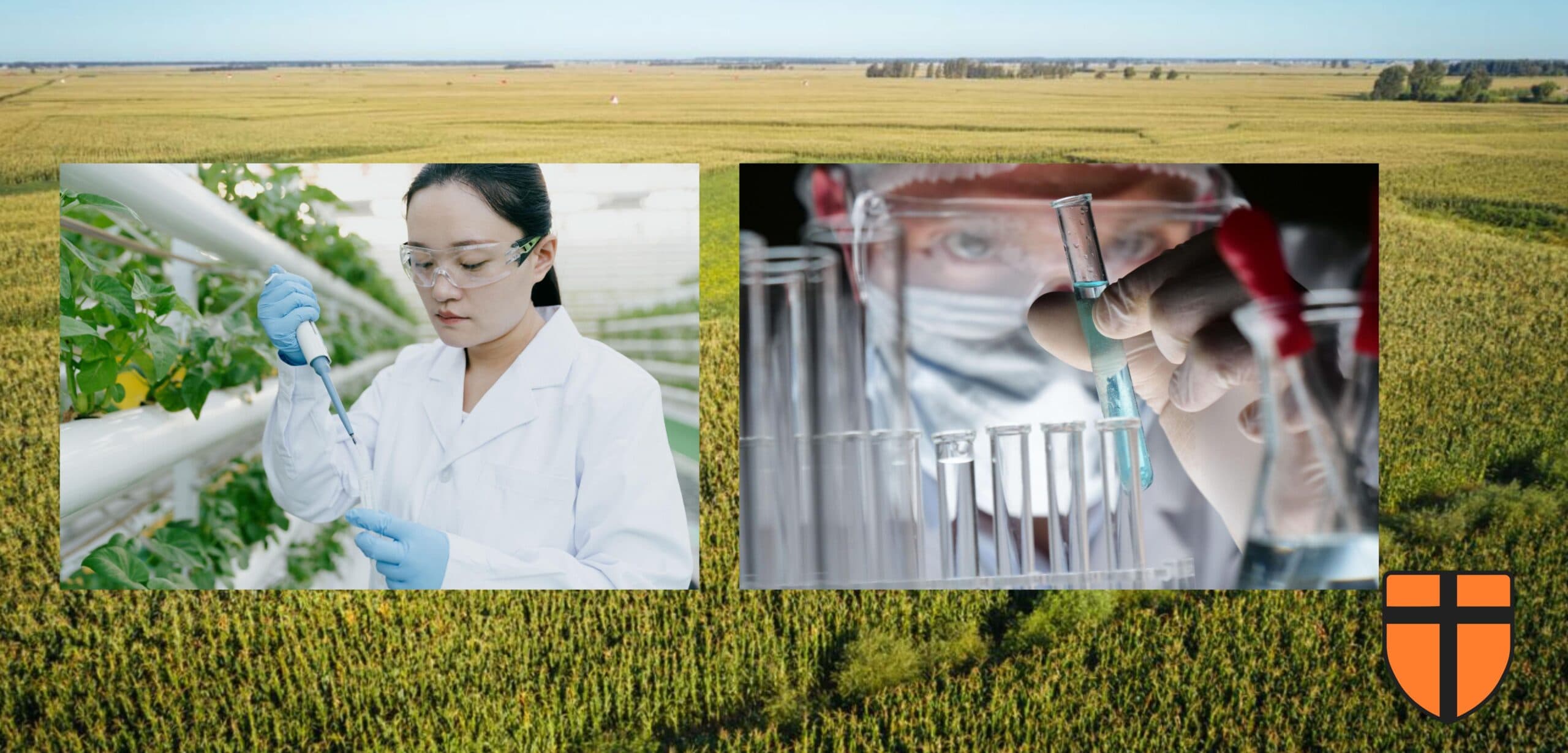
For most of human history, changing plants and animals required patience. Farmers selectively bred crops over generations, gradually shaping wheat, tomatoes, and livestock through small, inherited changes. In 1973, that process accelerated dramatically.
Herbert Boyer and Stanley Cohen inserted a gene from one bacterium into another, creating the first genetically modified organism. For the first time, life was altered by direct design rather than slow selection. Genetic engineering had begun.
What a GMO Actually Is
The term “GMO” is less precise than it appears. Broadly, it could describe nearly all domesticated crops, since human selection has altered their genetics for centuries. In practice, it refers to organisms whose DNA has been directly modified in a lab, often by transferring genes between species or editing sequences in targeted ways.
This distinction drives much of the controversy. Critics argue that crossing species boundaries in a lab is fundamentally different from traditional breeding. Scientists tend to focus on outcomes, emphasizing that the specific genetic change matters more than how it was made. This disagreement continues to shape global regulation.
From Breakthrough to Widespread Use
With that definition in place, the implications of the 1973 breakthrough became visible almost immediately.
By 1974, the first genetically modified animal, a mouse, had been created. In 1982, engineered bacteria began producing human insulin, offering a safer and more reliable treatment for diabetes.
The first GMO food, the Flavr Savr tomato, reached markets in 1994. It was not commercially successful, but it marked a turning point. By the mid-1990s, genetically modified crops such as soybeans, maize, cotton, and canola were being cultivated worldwide. Within two decades, global acreage had increased more than a hundredfold.
Applications soon extended beyond agriculture. Modified bacteria now produce clotting factors, growth hormones, and complex drugs. Gene therapy has delivered promising results, restoring vision in certain cases of inherited blindness and treating severe immune disorders. In 2015, the AquAdvantage salmon became the first genetically modified animal approved for human consumption. In 2024, a patient received a genetically modified pig kidney transplant.
The Debate Over Safety and Control
Public concern has followed these developments from the beginning. Questions about food safety, environmental impact, and corporate control remain central to the debate.
Scientific organizations have consistently found that approved GMO foods are as safe as their conventional counterparts. The World Health Organization, the American Medical Association, and the U.S. National Academy of Sciences have all reached similar conclusions. No verified health risks have been documented in peer-reviewed research.
Public opinion has not kept pace with that consensus. Skepticism remains widespread, especially in Europe. This gap reflects deeper concerns about trust, long-term effects, and the speed of technological change. Environmental gene flow, the spread of engineered traits to wild plants, continues to be monitored as a potential risk.
A New Phase: Precision Gene Editing
The development of CRISPR around 2012 marked a major shift. Earlier techniques often inserted foreign genes into an organism. CRISPR allows precise edits within an organism’s existing DNA, sometimes without adding any external genetic material.
One example is a mushroom engineered to resist browning by disabling a single enzyme. Because no foreign DNA was introduced, regulators treated it differently from traditional GMOs.
This has complicated regulatory systems. The United States generally distinguishes gene-edited organisms from GMOs, while the European Union classifies them similarly regardless of method. These differences create challenges for global research and agriculture.
The Organic Paradox
Europe’s push toward sustainable agriculture highlights a growing tension. The European Union aims to convert 25 percent of its farmland to organic production by 2030. However, organic farming excludes GMOs, and studies suggest organic yields are typically 15 to 20 percent lower than conventional yields.
Research published in Cell Reports Sustainability in 2025 suggests that excluding modern biotechnology may limit the ability to meet sustainability goals. Precision gene editing could help produce crops that are more resilient to drought, disease, and pests.
Some researchers propose a compromise: separate organic categories that allow or exclude new genomic techniques. Whether this aligns with the philosophical commitments of organic farming remains an open question.
What Comes Next
Genetic science continues to advance toward greater precision and broader application. Researchers are developing crops with improved resistance to disease and environmental stress, as well as enhanced nutritional value. Golden rice, engineered to produce vitamin A, offers one example of how genetic modification can address global health challenges.
In medicine, gene therapies are being tested for conditions such as sickle cell anemia, Parkinson’s disease, and certain cancers. Genetically modified organ transplants, once theoretical, are now entering clinical reality. These advances bring important questions. Who controls these technologies? How should they be regulated? Where should limits be set?
These are the questions we will have to answer in the coming years, questions showing the importance of ethics training in the sciences.