
Why There’s No “Perfect” Way to Sprint
Apr 13, 2026News
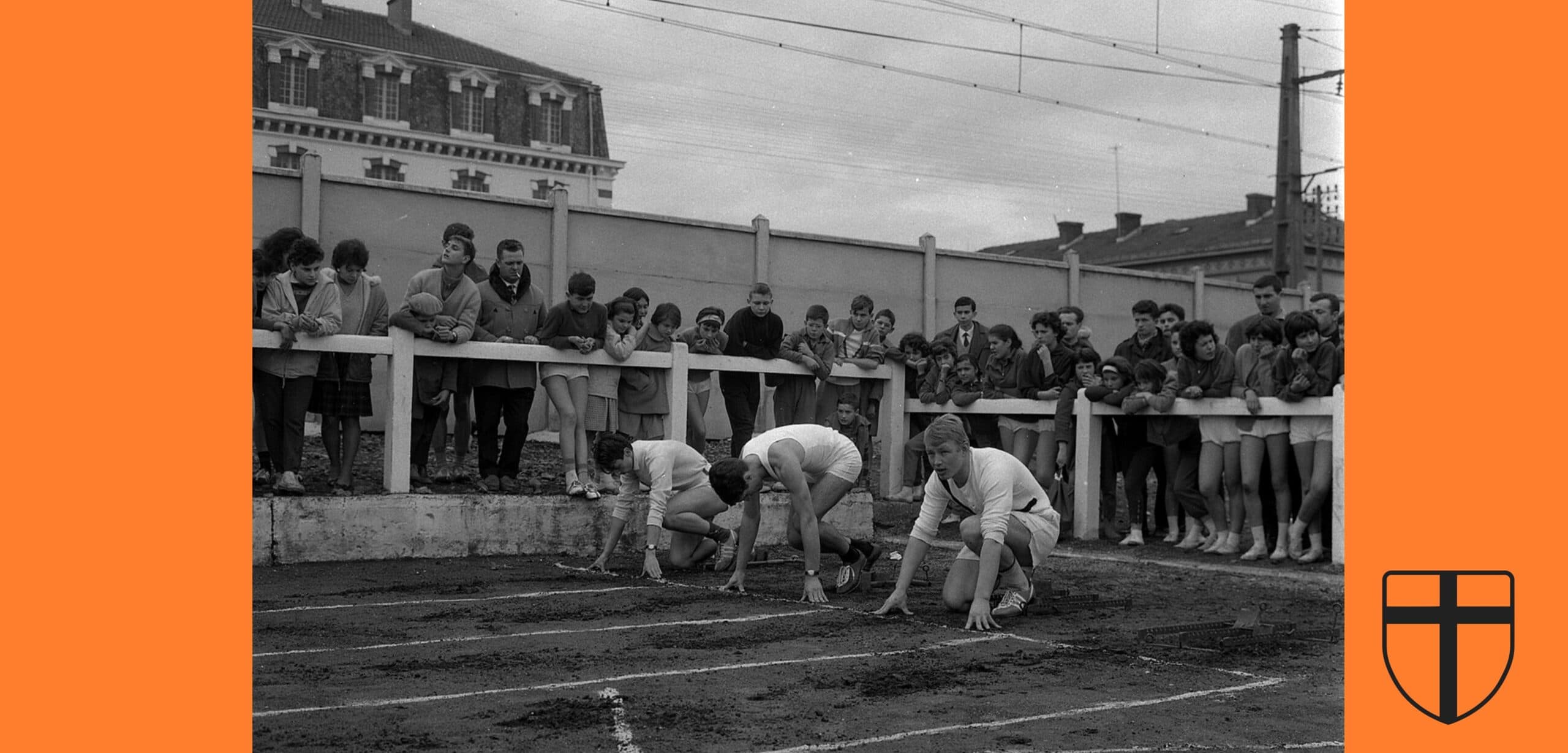
What if the thing coaches have been trying to fix about their athletes’ running form was never actually broken? A new review published in Sports Medicine (January 2026) is challenging one of the most deeply held assumptions in track and field: that there is one ideal sprint technique every athlete should strive to replicate.
The Traditional Approach
For decades, sprint coaching has meant breaking the running action into parts. Watch the legs, correct the arm swing, adjust the posture, then put it all back together and hope the pieces add up. Most coaches point to elite runners as the gold standard. Copy those mechanics, and you will run faster. Research increasingly suggests that is not how the human body works.
A Better Framework
Researchers from Flinders University, Nord University, the University of Mainz, and elite coaching organization ALTIS propose a different lens called dynamical systems theory. The core idea is that the body is not a machine with fixed, correctable parts. It is a complex, adaptive system where the brain, muscles, skeleton, nervous system, and environment are constantly working together to solve the challenge of moving faster. Sprint form does not get programmed in. It emerges, shaped by a person’s height, limb length, strength, fatigue, the surface underfoot, and dozens of other factors all interacting at once.
Usain Bolt’s record-breaking stride length was not just the result of perfect technique. It was a product of his 6-foot-4 frame, exceptional power output, and his body’s individual solution to the problem of maximum speed. His competitors could not simply copy that stride. They had shorter legs, different muscles, different everything. They needed to find their own answers.
Rethinking “Mistakes”
Here is where the research gets especially interesting. Traditional coaching treats stride-to-stride variation as error. The goal is consistency: same knee lift, same arm swing, same foot strike, every time. Under this new framework, that variation is not a flaw rather, it is how the body explores and discovers better movement patterns. Remove that exploration, and you may not refine technique at all. You may simply lock an athlete into a movement pattern that was never right for their body in the first place.
What This Looks Like in Practice
The review does not discard traditional coaching methods; drills and structured training still matter, but the philosophy behind them needs to shift. Rather than prescribing exactly how to move, coaches are encouraged to design environments where athletes can discover better patterns on their own.
One example from the research is adjusting the spacing of mini-hurdles along the track. Place them closer together, and the athlete naturally develops a faster step rate. Place them farther apart, and stride length increases. No verbal correction is needed; the body figures it out on its own.
Another method, called differential learning, deliberately introduces variety into training by changing exercises, surfaces, speeds, and starting positions across sessions. In one study cited in the review, athletes using this approach improved their top sprint speed nearly three times more than those in traditional repetition-based training over the same six-month period. That kind of gap does not come from working harder. It comes from training smarter.
The Bigger Takeaway
Optimal sprint technique is not a universal template, but an individual solution. Elite sprinters do share common traits, including short ground contact times, strong forward force production, and efficient leg recovery. But those are tendencies, not blueprints. How each athlete gets there looks different every time.
The coach’s role shifts from delivering the correct answer to creating the conditions where athletes can find their own. For coaches ready to make that shift, the first step is simple: build in more variety, ease up on the corrections, and trust the process of exploration.
In a sport decided by hundredths of a second, that reframe may be the most valuable tool in the bag.
Source: Hicks, D.S., McMillan, S., Schollhorn, W., and van den Tillaar, R. “Sprint Running Coordination: A Dynamical Systems Perspective.” Sports Medicine 56 (2026): 651-675.