When Worlds Collide: Astronomers May Be Watching a Planetary Crash in Real Time
Mar 16, 2026News
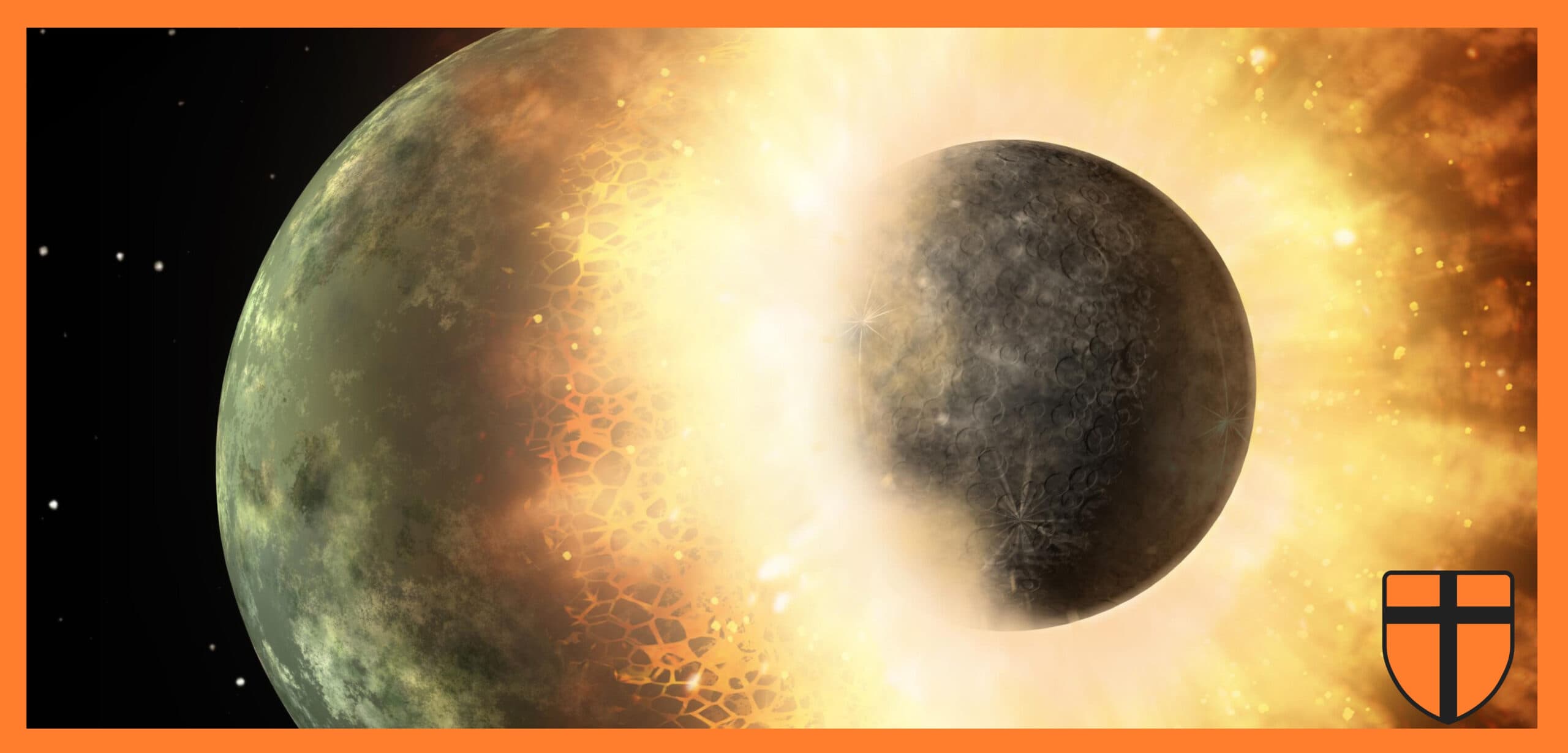
What does the birth of a planet look like? Astronomers believe it often begins with violence. Worlds collide, shatter, and slowly rebuild themselves from debris. Now researchers may have found a system where the aftermath of such a collision is unfolding in real time.
A newly reported object called Gaia-GIC-1 could be the dusty fingerprint of two large planet-building bodies smashing together around a distant star; the findings were published on March 11 in The Astrophysical Journal Letters by astronomers Anastasios Tzanidakis and James R. A. Davenport. If their interpretation holds, the system offers a rare glimpse into the chaotic stage when rocky planets like Earth take shape.
A Star Which Suddenly Changed
For years, Gaia-GIC-1 appeared completely ordinary: a faint F-type star roughly 3,000 parsecs away and about 1.3 times the mass of the Sun. Then around 2019, it began fading in visible light while simultaneously brightening in infrared. That combination is a powerful clue. When visible light dims but infrared increases, it usually means dust has appeared around the star, blocking optical light while radiating heat.
What the Data Reveals
Examining nearly a decade of observations, researchers found the star had been showing regular brightness dips every 380.5 days, likely caused by dusty material orbiting at about 1.1 astronomical units, approximately Earth’s distance from the Sun. Then the infrared brightness surged and has remained elevated for more than four years while visible light has dimmed irregularly. The simplest explanation? A major collision created a massive fresh dust cloud now orbiting the star.
The debris is extremely hot, around 900 Kelvin, and its mass is estimated at least equivalent to a small moon like Saturn’s Enceladus. That figure likely represents only the smallest visible particles, as the original colliding bodies were probably much larger. Some brightness dips have lasted around 200 days, suggesting the cloud has stretched into an elongated arc along its orbit, consistent with simulations of giant impacts.
Why It Matters
Direct observations of planetary collisions around other stars remain rare. Our own Moon is thought to have formed from a similar impact over 4 billion years ago, but watching this process happen elsewhere is extraordinary. Future observations with the James Webb Space Telescope and the Vera C. Rubin Observatory could track how the debris cools and clears, revealing new insight into the violent process which built our solar system and countless others.