Black Hole Spectroscopy Reaches New Heights with Record-Breaking Gravitational Wave Detection
Feb 6, 2026News
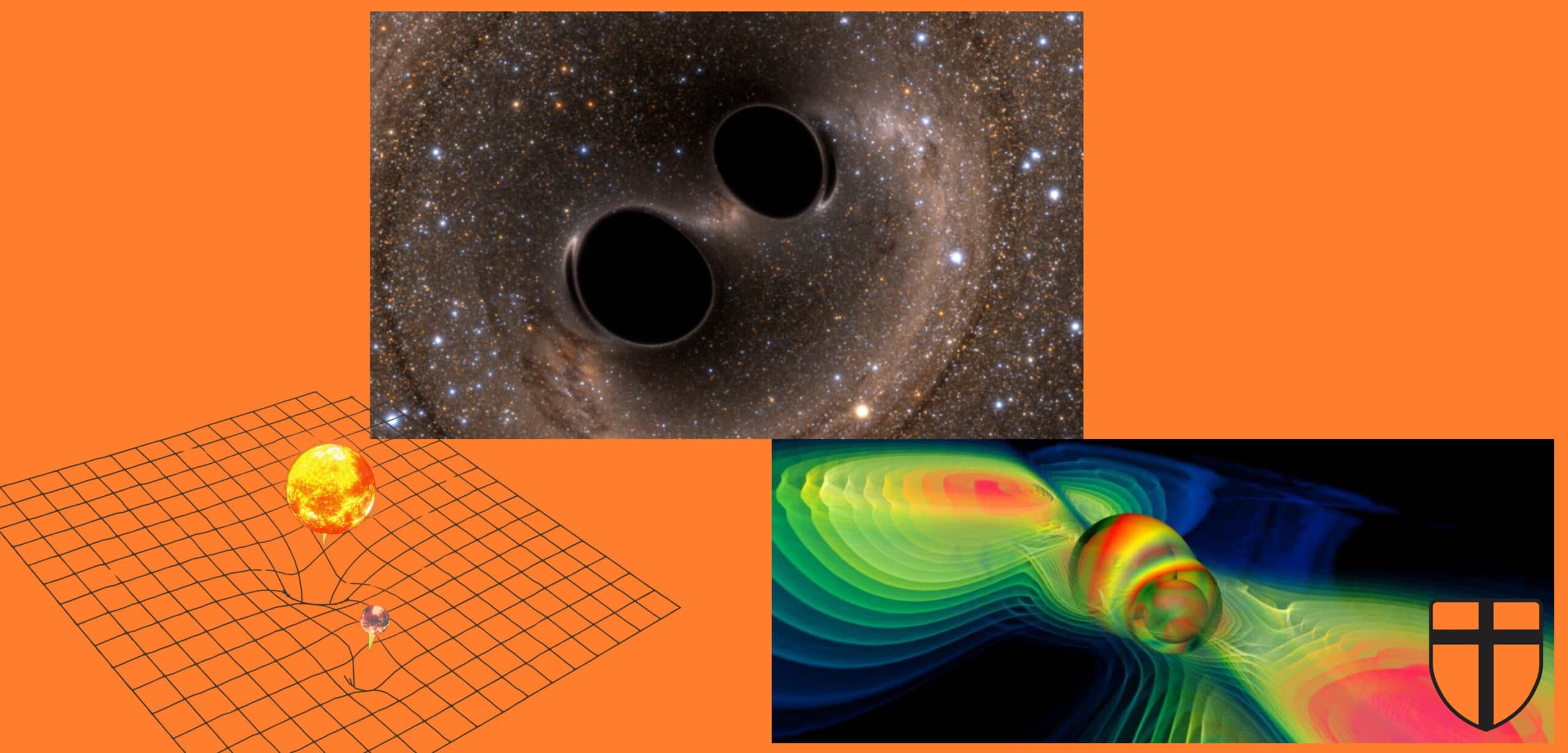
On January 14, 2025, scientists detected the strongest gravitational wave signal ever recorded. Known as GW250114, the signal was observed by the LIGO detectors and produced by the collision of two black holes, each more than thirty times the mass of the Sun. Compared with the first historic detection in 2015, this signal was dramatically clearer, offering researchers an unusually detailed view of one of the most extreme events in the universe.
Gravitational waves are ripples in spacetime created when massive objects accelerate, such as when two black holes spiral toward one another and merge. Most detections so far have been faint and fleeting, enough to confirm Einstein’s predictions but not enough to examine them in detail. GW250114 was different. Its exceptional strength allowed scientists to study the full sequence of the merger with unprecedented clarity, from the slow inspiral through the violent collision and into the final settling of the newly formed black hole.
That final phase, known as the ringdown, is of particular interest. After the merger, the newborn black hole briefly vibrates before becoming stable. These vibrations emit gravitational waves with characteristic frequencies that depend only on the black hole’s mass and spin. According to general relativity, and the so-called no-hair theorem, all black holes should behave this way, with no additional features or complexities. In effect, black holes are predicted to be remarkably simple objects.
Previous detections hinted at this ringing behavior, but the signals were too weak to reveal much detail. With GW250114, researchers were able to identify multiple components of the ringdown signal using a single event. The observed pattern was consistent with what general relativity predicts for a rotating black hole, providing one of the clearest single-event confirmations of this aspect of Einstein’s theory to date.
The strength of the signal also allowed scientists to test general relativity across the entire merger process. During the earlier inspiral stage, when the black holes orbited each other at increasing speeds, the gravitational waves carried information about how gravity behaves in strong and rapidly changing conditions. Analyses of this portion of the signal showed no deviations from Einstein’s predictions and produced tighter constraints than had previously been possible from individual detections.
One reason GW250114 proved so valuable lies in the nature of the system itself. The two black holes were nearly equal in mass and had relatively low spins, merging along a nearly circular orbit. This symmetry simplified the signal and made it easier to interpret. The orientation of the system relative to Earth was also favorable, allowing features of the gravitational waves that are often difficult to detect to stand out more clearly.
Beyond testing general relativity, the event also allowed researchers to examine other long-standing theoretical ideas. One of these is Stephen Hawking’s black hole area theorem, which states that the total surface area of black holes cannot decrease in any physical process. By comparing the inferred properties of the initial black holes with those of the final remnant, scientists found strong evidence that the final black hole’s surface area exceeded the combined areas of its predecessors, in agreement with the theorem.
The data from GW250114 have also been used to place limits on alternative theories of gravity that predict subtle changes in how black holes merge and settle. While no deviations from general relativity were found, the event demonstrated that a single exceptionally loud detection can provide constraints comparable to those obtained by combining many weaker signals. This highlights the growing power of gravitational wave astronomy as detectors become more sensitive.
More than a century after general relativity was introduced, black holes have become one of the theory’s most demanding testing grounds. GW250114 provided a rare opportunity to listen closely as a black hole formed and settled, and everything observed matched Einstein’s predictions. While physicists continue to search for cracks that might point toward new physics, this remarkable signal reinforces a familiar conclusion: even in the most extreme environments the universe can offer, general relativity continues to describe gravity with extraordinary accuracy.
Read more here.