Building the Future: A Carbon-Negative Alternative to Concrete
Jan 9, 2026News
As the construction industry faces growing pressure to reduce its environmental impact, researchers are increasingly turning to innovative, sustainable alternatives to traditional building materials. One of the most significant challenges is concrete, whose production contributes heavily to global carbon emissions. In response, scientists are exploring materials that not only reduce emissions but actively remove carbon dioxide from the atmosphere. A recent breakthrough from Worcester Polytechnic Institute represents a promising step toward a more sustainable future for construction.
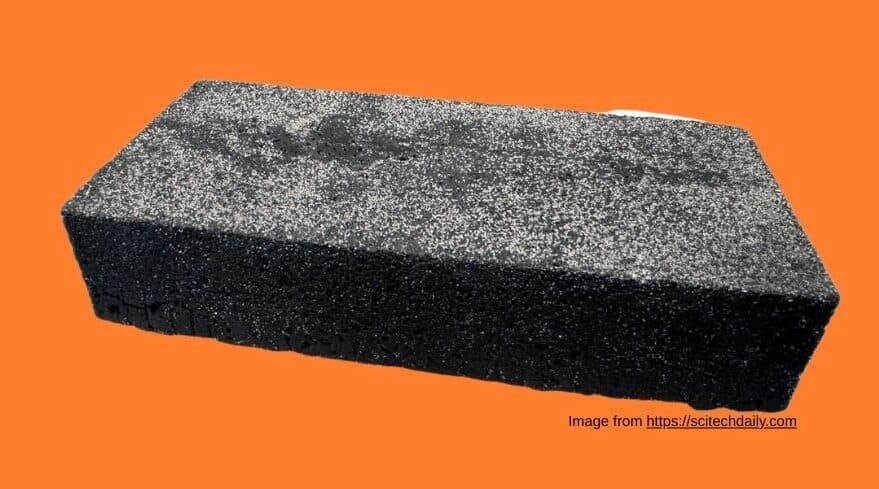
Researchers have discovered a new building material that, rather than emitting carbon, traps it within its structure. A team at Worcester Polytechnic Institute has developed a carbon-negative material known as enzymatic structural material (ESM), paving the way for more sustainable construction practices. ESM is strong, durable, recyclable, and produced through a low-energy process inspired by biological systems.
The researchers created ESM by harnessing an enzyme capable of converting carbon dioxide into solid mineral particles. These particles bond together and cure under gentle conditions, allowing the material to be shaped into structural components in just a few hours.
By contrast, conventional concrete requires extremely high temperatures and long curing times, making it both energy-intensive and environmentally damaging. As team leader Niam Rahbar explains, “Concrete is the most widely used construction material on the planet, and its production accounts for nearly 8% of global CO₂ emissions. What our team has developed is a practical, scalable alternative that doesn’t just reduce emissions—it actually captures carbon. Producing a single cubic meter of ESM sequesters more than six kilograms of CO₂, compared to the 330 kilograms emitted by conventional concrete.”
ESM has shown promising potential for real-world applications, including roof decks, wall panels, and modular building components. These uses could significantly reduce long-term construction costs while also decreasing the amount of material sent to landfills each year. The innovation holds particular promise for affordable housing, climate-resilient infrastructure, and disaster-relief construction.
The development of enzymatic structural material marks an important advance in sustainable building technology. By combining strength, scalability, and carbon sequestration, ESM challenges the dominance of traditional concrete and offers a viable path toward greener construction practices. As demand for climate-conscious solutions continues to grow, innovations like ESM may play a crucial role in reshaping how, and with what, we will build the future.